Play Video
Play Video
Play Video
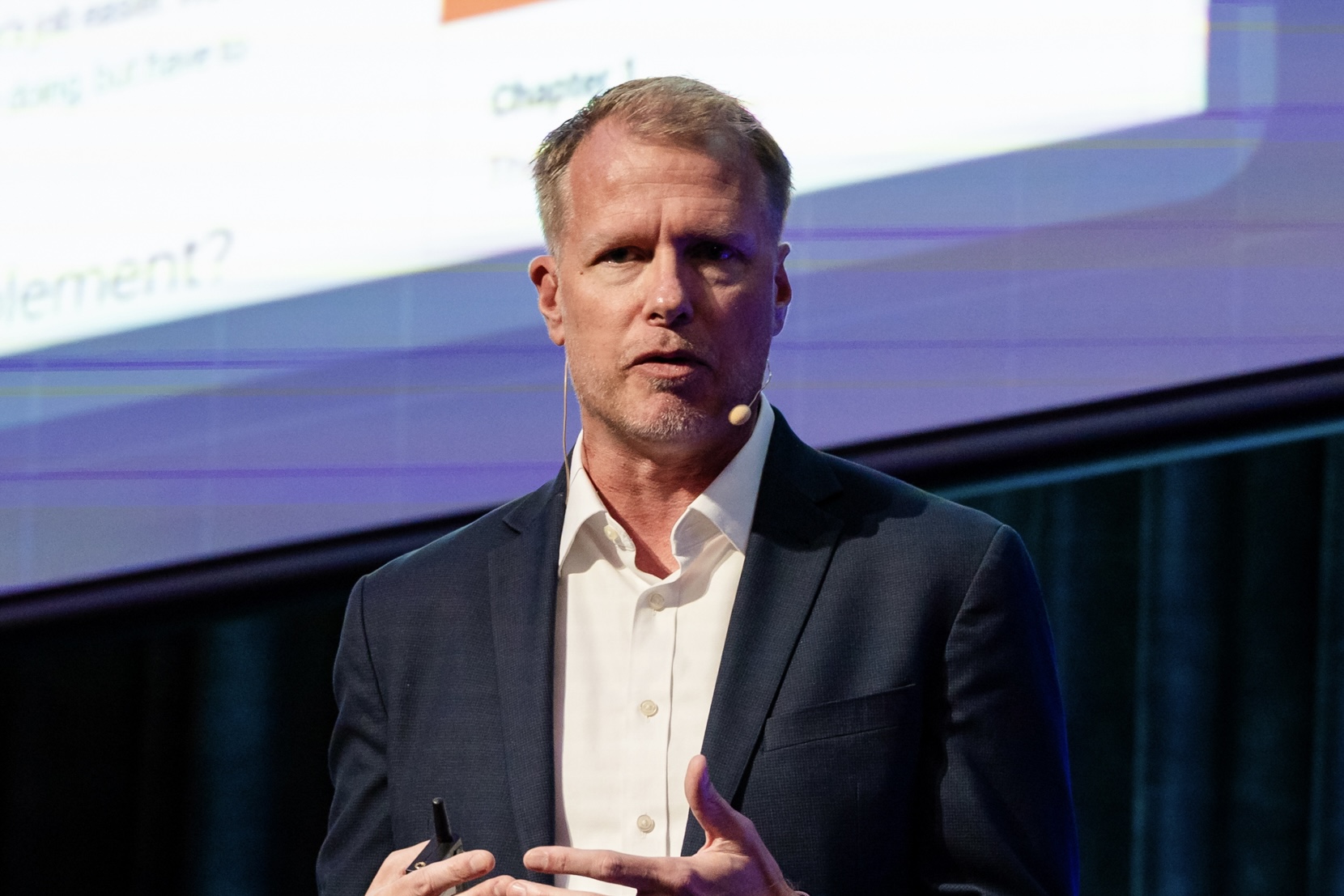
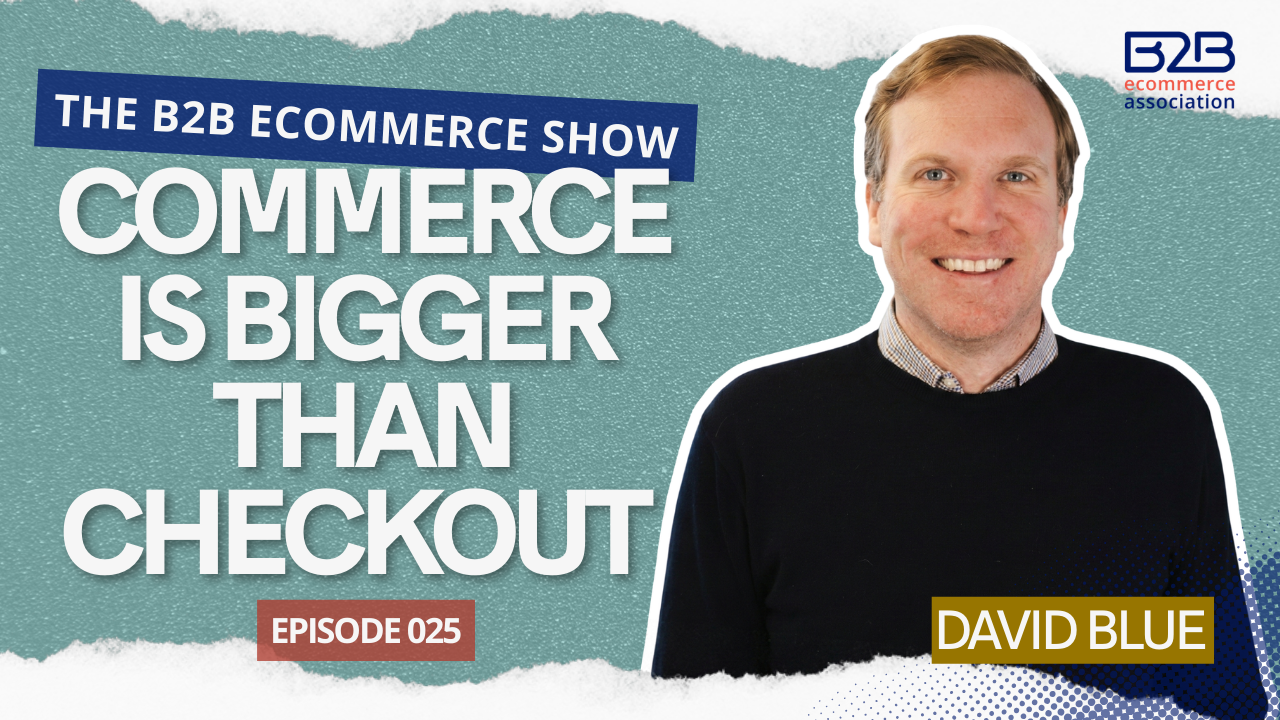
In a recent episode of the B2B eCommerce podcast with David Blue, Founder and CEO of Saltbox Management, for a conversation that went far beyond storefronts and shopping carts.
What emerged was a powerful reframing of how manufacturers, distributors, and complex B2B enterprises should think about digital commerce. Not “little c” commerce, the transaction, but “Big C” Commerce, the unified, omnichannel experience that surrounds how business actually gets done.
This is a must-read for B2B leaders navigating Salesforce, ERP complexity, omnichannel strategy, and the next wave of digital transformation.
What Is Big “C” Commerce?
Blue makes a critical distinction early in the conversation:
- Little “c” commerce = The eCommerce storefront. The add-to-cart. The checkout.
- Big “C” Commerce = The entire commercial ecosystem across channels.
For most B2B organizations, eCommerce is only a small percentage of total revenue. Orders still come through:
- Sales reps
- EDI
- Customer service teams
- Portals
- Complex configuration processes
Yet companies often obsess over storefront metrics like conversion rates and cart size.
Blue challenges that mindset.
B2B commerce isn’t about transactions. It’s about enabling customers to do their job better, regardless of where the transaction ultimately happens.
And that shift in thinking changes everything.
Stop Trying to Be “The Amazon of B2B”
It’s a phrase heard countless times:
“We want an Amazon-like experience.”
Blue agrees that this aspiration often misses the point.
Customers in B2B aren’t shopping for fun. They’re trying to:
- Keep a hospital’s HVAC running.
- Source parts for industrial equipment.
- Maintain manufacturing uptime.
- Manage procurement workflows.
They don’t want engagement.
They want utility.
In fact, in B2B, time on site is often a negative KPI. The faster someone can find what they need and get out, the better the experience.
Instead of copying what Amazon looks like, Blue argues companies should replicate how Amazon thinks:
- Start with the customer’s job.
- Work backward.
- Integrate into existing workflows (like procurement systems).
- Remove friction across systems.
That’s Big C Commerce in action.
Sales-Assisted vs. Self-Service: It’s Not Either/Or
One of the strongest themes in the episode is the need for differentiated commerce experiences based on buyer type and complexity.
Blue outlines two distinct sales motions:
1. High-Value, Complex Customers
- Build-to-order
- High configuration
- Long sales cycles
- Sales-assisted motion
2. Long-Tail, High-Volume Buyers
- Reorders
- Standardized parts
- Lower complexity
- Self-service eCommerce motion
The mistake many companies make?
Trying to force both into one “clean” unified experience.
Instead, Blue advocates:
- Different experiences
- Built for specific personas and purchase types
- But connected behind the scenes through shared data and systems
A quote started by a sales rep should be finishable online.
A cart built online should trigger rep engagement if necessary.
No duplicated steps. No broken workflows.
That’s the power of unified systems.
Why Salesforce Plays a Strategic Role in B2B Commerce
Saltbox focuses exclusively on the Salesforce ecosystem, and that’s not accidental.
Blue explains that most Fortune 2000 companies already use Salesforce for CRM — sales, service, marketing. That front-office footprint creates a strategic opportunity.
Rather than layering yet another disconnected commerce platform, Saltbox advocates for CRM-driven commerce:
- Shared data model
- Native segmentation
- Sales and commerce working off the same customer record
- Reduced integration overhead
In contrast, ERP systems were never built to deliver customer-centric experiences. They’re designed for the back office.
The key strategic question Blue asks clients:
Do you want an ERP-driven experience, or a customer-centric experience?
That framing often clarifies the path forward.
The ERP Reality in Manufacturing and Distribution
ERP remains the operational backbone in B2B.
But Blue is pragmatic: pricing, inventory, and order orchestration may live in different systems depending on the organization.
There is no one-size-fits-all answer.
Instead, Saltbox works backward from customer outcomes:
- Where should pricing live?
- When should orders hit ERP?
- What data needs to flow to the storefront?
- What needs to return to CRM?
The goal isn’t technical purity.
It’s seamless experience.
A Real-World Example: HVAC Parts in Seconds, Not Minutes
One standout case Blue shares involves a large Fortune 1000 HVAC manufacturer.
Field technicians, often on hospital rooftops, needed to find parts fast. The legacy experience (built on SharePoint) took minutes to navigate.
Saltbox helped modernize the process:
- Mobile-first design
- Serial number-based search
- Real-time inventory visibility
- Integrated ERP and data lake connectivity
- Advanced search functionality
Result?
Parts discovery dropped from minutes to seconds.
In razor-thin-margin industries, seconds matter. Especially when third-party technicians could choose competitors instead.
That’s Big C Commerce measured not in cart conversions, but in uptime, loyalty, and margin expansion.
Why Saltbox Exists: The B2B Digital Gap
Blue founded Saltbox in 2021 after recognizing a white space in the Salesforce ecosystem.
While B2C digital transformation accelerated rapidly, B2B lagged behind, often by a decade.
But the shift is inevitable:
- Millennial buyers now dominate procurement.
- Digital expectations are rising.
- Omnichannel coordination is no longer optional.
Blue believes B2B is still in the early innings of a “hockey stick” growth curve in digital transformation.
Saltbox positioned itself squarely at that inflection point.
AI-Enabled Services: Amplifying Human Expertise
One of the most forward-looking parts of the conversation centered on how Saltbox delivers.
Blue describes the firm as an AI-enabled Salesforce services company, but not in the buzzword sense.
Saltbox built a proprietary system called Saltbox One that:
- Captures institutional knowledge
- Encodes delivery best practices
- Scales collective expertise across engagements
- Supports architecture and validation decisions
Importantly, AI isn’t replacing consultants.
It’s amplifying them.
This allows teams to focus on what actually matters:
- Deep customer collaboration
- Architecture decisions
- Strategy alignment
- Business transformation
In complex B2B environments, judgment still wins.
The Bigger Lesson: Measure What Matters
Perhaps the most important takeaway from this episode is how success should be measured.
Not:
- % of revenue through eCommerce
- Cart conversion rate
- Engagement metrics
But:
- Can customers do their job more effectively?
- Are friction points eliminated?
- Is cross-channel movement seamless?
- Are sellers empowered instead of threatened?
If the answer is yes, revenue follows.
Final Thoughts
The episode closed with a clear observation: David Blue’s perspective on Big C Commerce is rare.
It’s strategic.
It’s systems-aware.
And it’s grounded in how real B2B businesses operate.
In a world still obsessed with storefront aesthetics, Blue’s message is clear:
Commerce isn’t about checkout.
It’s about enabling work.
And for manufacturers and distributors navigating Salesforce, ERP complexity, and omnichannel transformation, that distinction could define the next decade.
Contact David | Saltbox Management