Play Video
Play Video
Play Video
Digital transformation in B2B is often framed as a technology challenge, new platforms, new tools, new channels. But as explored in a recent episode of The B2B eCommerce Show, the toughest challenges are rarely purely technical. More often, they stem from organizational and operational complexity, and from how data moves across the business.
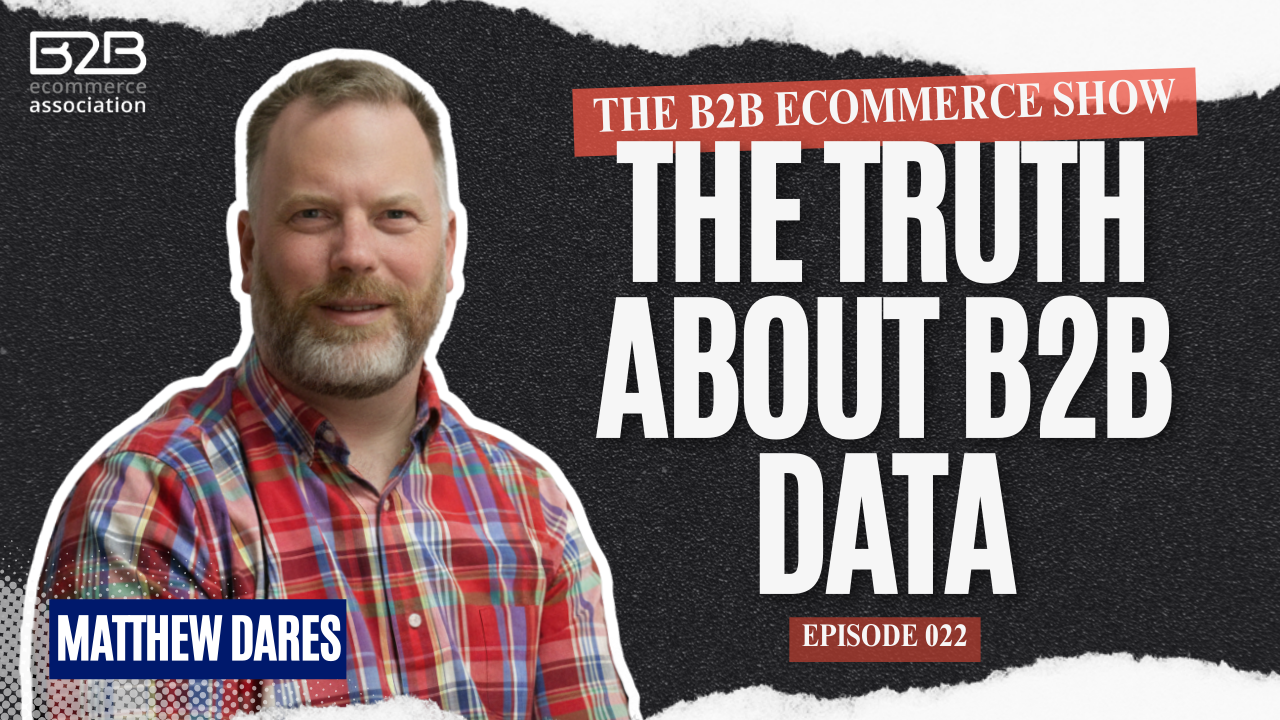
In a recent conversation with Matthew Dares, Partner and Head of Customer Success at TORQ IT, the discussion unpacked two forces currently reshaping B2B organizations:
- the need for operational clarity and disciplined execution, and
- the growing importance of master data management as AI accelerates across commerce.
Matthew brings a rare combination of perspectives to this discussion. With a background spanning electrical engineering, computer science, energy, and academic research, and years advising enterprise organizations, he is known for translating complex technical systems into practical, scalable outcomes. That mindset was evident throughout the conversation.
Why Growing B2B Companies Break Without Operational Structure
TORQ IT didn’t adopt an operating framework because it was trendy. According to Matthew, they reached a point familiar to many growing B2B firms: strong people, strong demand, but increasing internal friction.
As organizations scale, informal decision-making and tribal knowledge stop working. Responsibilities blur. Founders carry too much weight. Execution slows, even though everyone is working harder.
To address this, TORQ IT adopted EOS (Entrepreneurial Operating System), a framework popularized by the book Traction. The shift was transformative.
EOS introduced:
- clear ownership for decisions and responsibilities
- repeatable processes instead of ad hoc execution
- measurable goals and weekly accountability
- alignment around shared core values
What surprised Matthew most wasn’t the framework itself, it was how much clarity it created. Decision-making became faster because ownership was explicit. Execution improved because goals were realistic, time-bound, and visible across the organization.
For B2B leaders driving digital change, this lesson is critical:
technology initiatives fail when organizations don’t change how they operate.
Change Management: Why “Slow Is Smooth, Smooth Is Fast”
One of the most relevant insights for manufacturers and distributors navigating digital transformation was TORQ IT’s approach to change.
Rather than attempting massive, all-at-once transformation, the team focused on quarterly priorities, referred to in EOS as “rocks.” These are the most important outcomes the organization commits to delivering in a given quarter.
Early on, like many teams, TORQ IT tried to do too much. Over time, they learned to right-size their goals, choosing initiatives that were achievable and meaningful rather than aspirational but unrealistic.
This discipline had real downstream impact:
- improvements in project management became visible to clients
- execution quality increased incrementally but consistently
- organizational confidence grew as teams delivered on commitments
For B2B ecommerce leaders, the parallel is clear. Whether the initiative is ecommerce, PIM, ERP modernization, or AI enablement, sustained progress beats rushed transformation.
Knowing Who You Are and Who You Are Not
Another defining theme of the conversation was focus.
TORQ IT made intentional decisions about:
- which platforms they support
- which types of problems they solve
- which clients they are best positioned to serve
Rather than spreading expertise across dozens of technologies, TORQ IT chose to specialize deeply in Pimcore for data management and Shopware for ecommerce, platforms well suited for complex B2B requirements.
That focus allows them to:
- implement faster
- follow platform-specific best practices
- reduce risk for clients
- deliver higher-quality outcomes
In a market crowded with generalists, this depth has become a competitive advantage, especially for manufacturers and distributors dealing with complexity rather than simplicity.
PIM vs. MDM: Why the Debate Matters More in the Age of AI
One of the most valuable sections of the discussion centered on the difference between Product Information Management (PIM) and Master Data Management (MDM), and whether AI will eventually replace both.
Matthew’s perspective was grounded and pragmatic.
PIM systems traditionally focus on managing product data for syndication across channels. MDM takes a broader view, treating product data as just one part of a “golden record” that also includes:
- customer data
- supplier data
- location data
- logistics and fleet data
- configuration and dimensional data
In many B2B organizations, especially distributors, this data is fragmented across ERP systems, ecommerce platforms, spreadsheets, and manual processes. MDM platforms like Pimcore provide a centralized source of truth that other systems can trust.
While AI is rapidly improving data enrichment and automation, Matthew was clear:
AI still needs a trusted source of truth.
Without well-structured, governed data, AI simply accelerates inconsistency rather than eliminating it.
AI, MCP Servers, and the Future of Product Data
Looking ahead, Matthew described a future where AI agents don’t replace PIM or MDM, but interact with them more intelligently.
Emerging concepts like Model Context Protocol (MCP) servers allow AI tools to interact directly with live product data through defined interfaces. Instead of exporting static datasets into AI models, organizations can let AI query, interpret, and act on authoritative data in real time.
This shift has major implications:
- faster updates from suppliers
- reduced manual data handling
- more accurate customer experiences
- safer use of AI in regulated or high-liability environments
In this model, PIM and MDM don’t disappear, they evolve into the backbone that AI relies on.
Manufacturing vs. Distribution: Different Data Problems, Same Stakes
The conversation also highlighted key differences between manufacturers and distributors.
Manufacturers often deal with:
- fewer SKUs
- higher configuration complexity
- strong emphasis on product definition and compliance
Distributors, by contrast, manage:
- massive SKU volumes
- frequent supplier updates
- complex fitment and compatibility data
- multiple downstream sales channels
Despite these differences, both groups face the same core challenge:
how to make product and operational data easy to consume, internally, by partners, and eventually by AI-driven systems.
Organizations that solve this problem become easier to do business with. Over time, that ease becomes a competitive moat.
The Bigger Lesson for B2B Digital Leaders
This conversation with Matthew Dares reinforces a truth many organizations are still learning:
Digital transformation is not a platform decision. It’s an operational and data strategy decision.
Strong execution frameworks like EOS help organizations absorb change without chaos. Robust master data strategies ensure that ecommerce, AI, and future innovations are built on solid ground.
For manufacturers and distributors navigating complexity, the path forward isn’t about chasing the next trend. It’s about building clarity, of ownership, of priorities, and of data, and letting technology amplify that foundation.
That’s how scalable, resilient B2B commerce is built.
Contact Matthew | TORQ IT